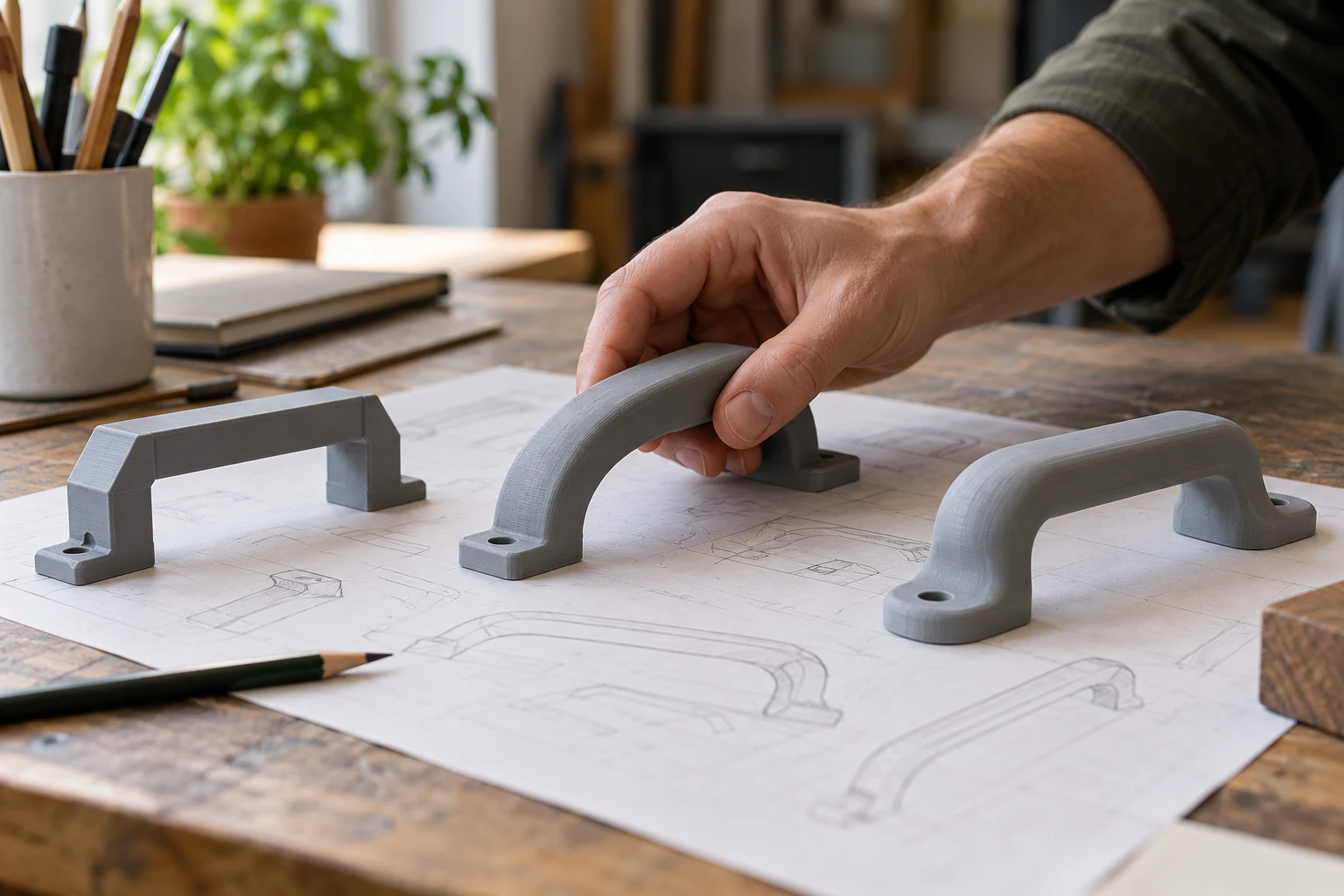
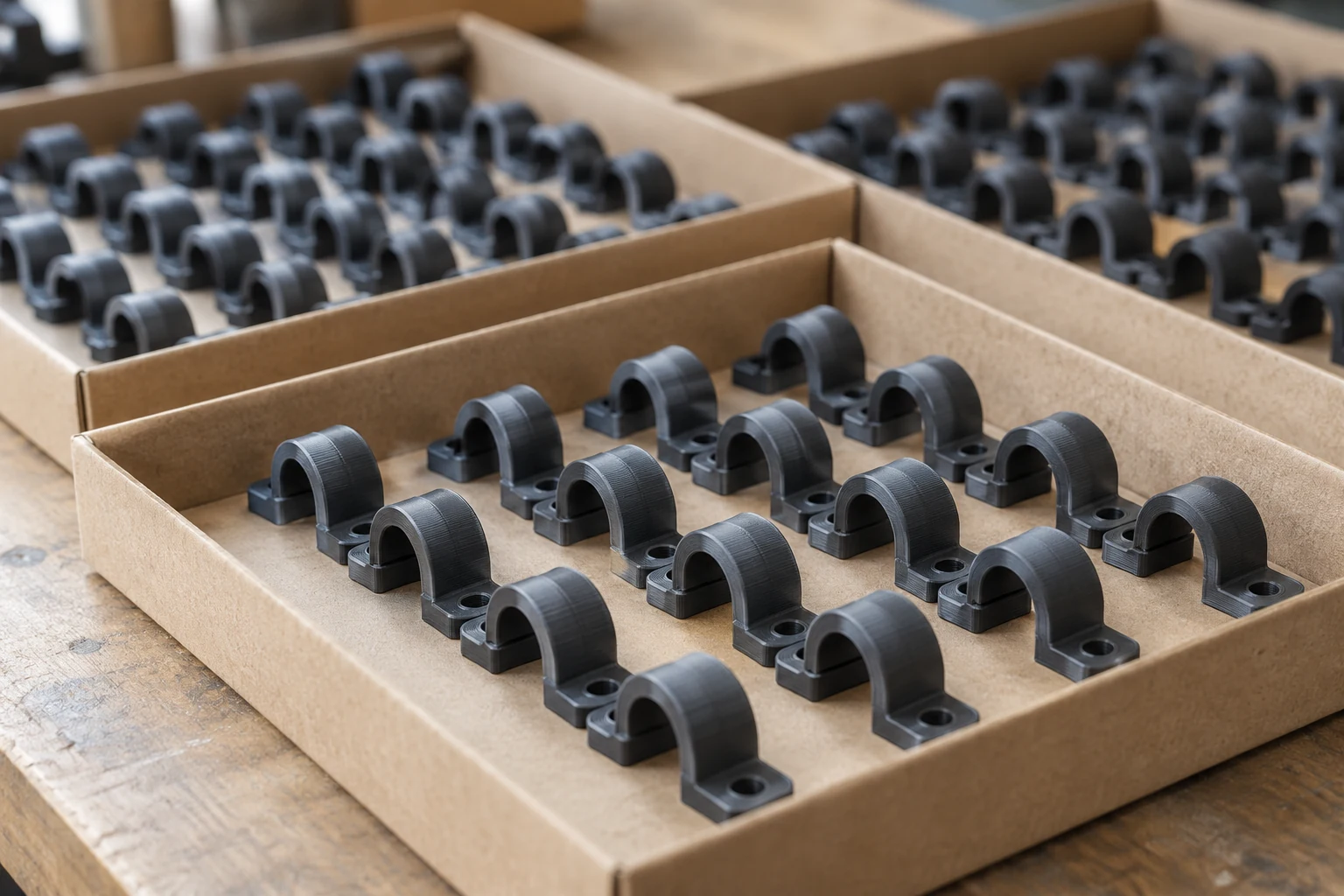
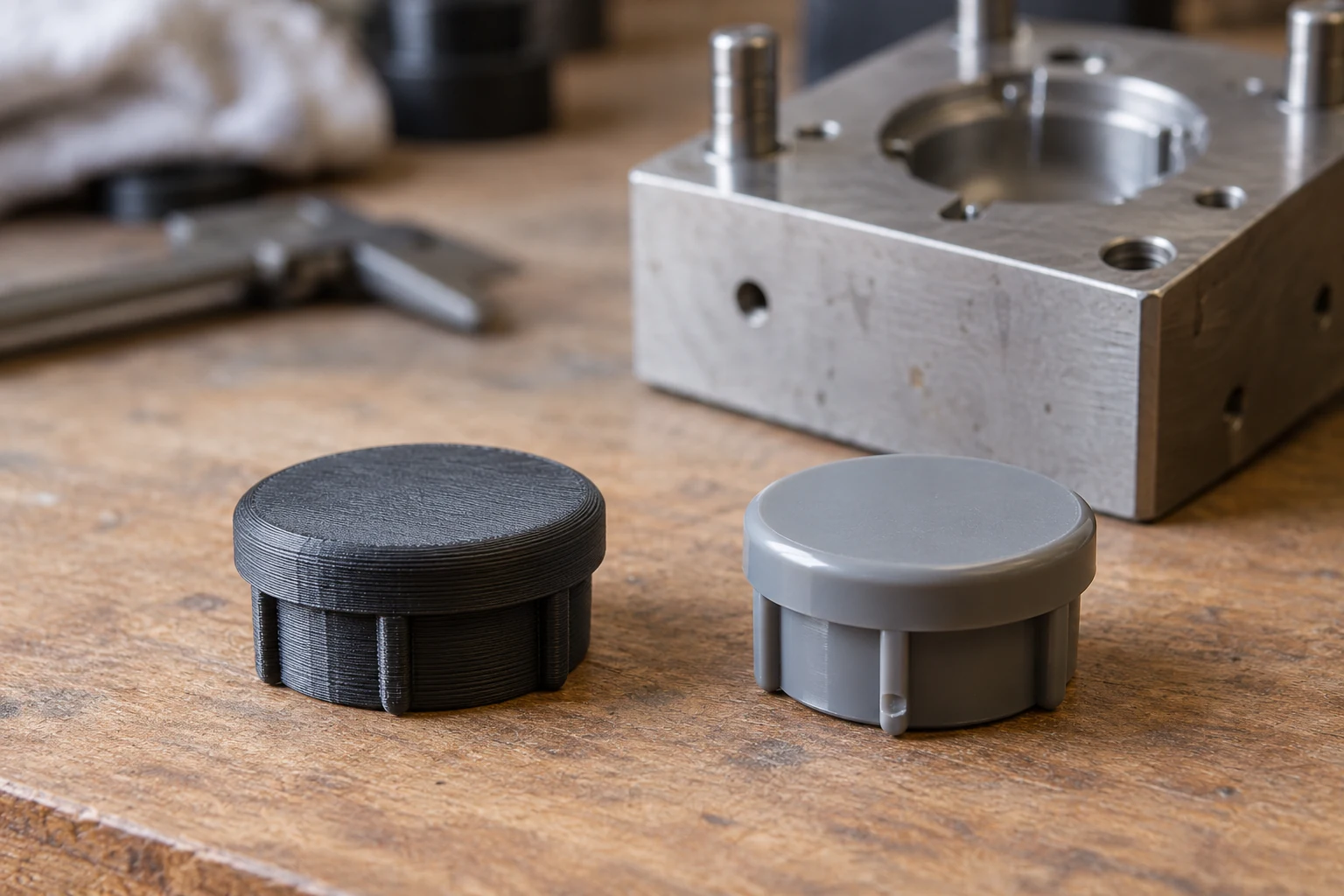
Consider 3D printing where a business needs an unusual holder, tray, stop or assembly jig. Begin at one workstation and test a sample during the operation. Judge the benefit through task time, handling and errors.
Look for a recurring difficulty
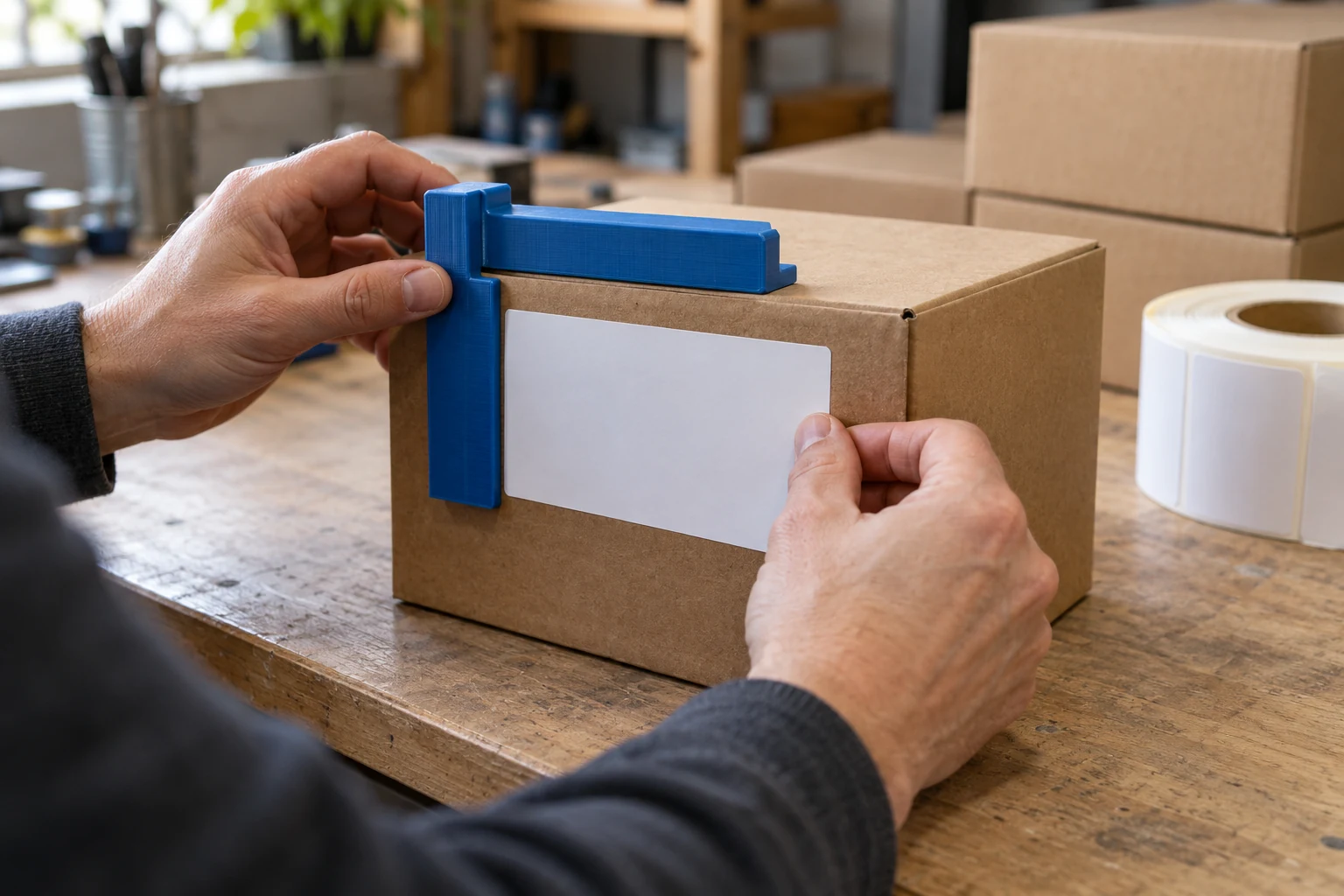
A worker repeatedly searches for a tool, holds a workpiece by hand or realigns an item before packing. These observations can identify a useful fixture project. Describe the operation and understand the source of the loss first. Sometimes repositioning an existing tool is enough.
If a standard solution does not fit, discuss a custom holder or jig. A tray for a particular set of parts is one possible way to organize a workstation. That is an example of a task, rather than a promise of measured savings. Test the effect in your own process and compare simpler alternatives.
Describe the operation the part should improve
Photograph the workstation and provide the objects’ dimensions. Show movement direction, contact points and the order of actions. A short video can help explain the operation. Say who will use the fixture and whether its position can be changed.
Include loads, temperature, liquid exposure and frequency of use. A manual packing jig and a fixture beside moving machinery require different assessments. High forces, high temperatures or rapid wear may call for another material, another process or a combination of plastic and metal.
Try one sample at the actual workstation
Do more than check whether a holder fits on the desk. See whether an object can be picked up comfortably, clothing catches, and access remains for cleaning or replacement supplies. Ask the user to carry out the normal sequence. The fixture should help the work rather than force every movement around itself.
Record observations and make the required changes to the model. Check mating dimensions for mountings and ensure a jig follows the actual workpiece. A simple trial part provides practical feedback before several workstations are fitted with identical items.
Measure whether the improvement pays back
Time the same operation before and after the change over several repetitions. Include design, manufacture, installation and eventual replacement in the cost. A small time saving on an infrequent task may not cover custom modeling. The same saving on a frequent operation can have a different value.
Saving ten seconds over one hundred repetitions gives 1000 seconds, or about 17 minutes. This is an arithmetic illustration, not a measured result from one of our products. Converting it to money requires the actual workload and a realistic account of how the released time is used.
Repeat the tested design
Keep the approved version, purpose, material and critical dimensions. Then discuss copies for other workstations. If their geometry differs, the automatic discount for identical parts cannot simply be applied to the whole set. Small-batch terms depend on the contents of the order.
Upload a ready file to the calculator, or send photographs and an operation description through the project form. For development from scratch, read the prototyping guide. One clear problem and one testable sample are enough to begin.
Common questions
Is one custom workplace holder worth considering?
Yes, when it addresses a specific task and the complete cost is justified. The first example can also test an idea before it is repeated at other workstations.
Can any metal fixture be replaced with a printed one?
No. Forces, temperature, wear and the consequences of failure matter. Some operations need metal or another solution. Print feasibility is assessed from the actual task.
Technical references
Manufacturer guides explain printing and design principles. We agree the requirements for your particular part before production.
Find out what your model will cost.
Upload an STL or OBJ. If you do not have a file, send photos, a sketch and measurements. Modeling and printing are quoted separately.
Back to DECORDS 3D