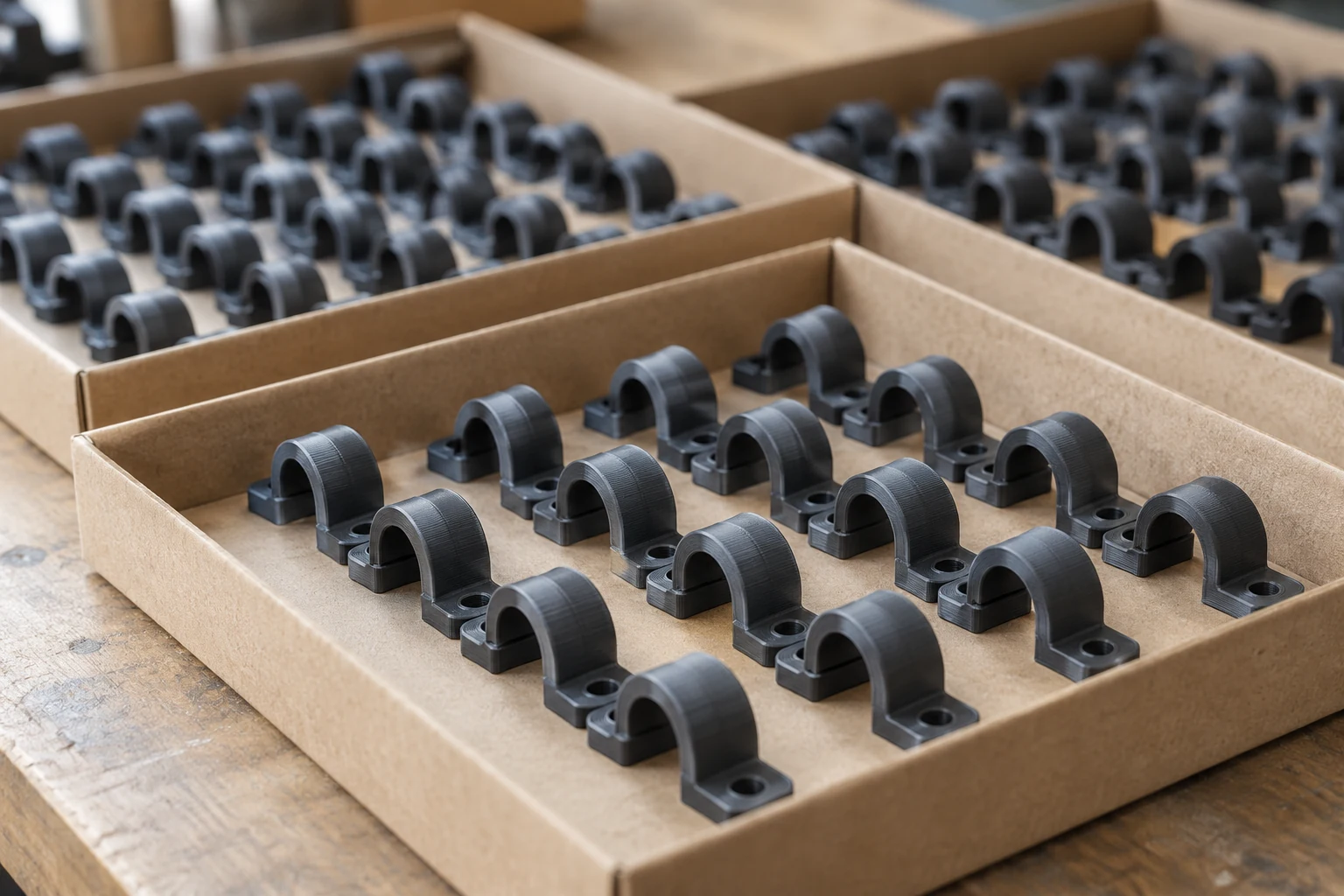
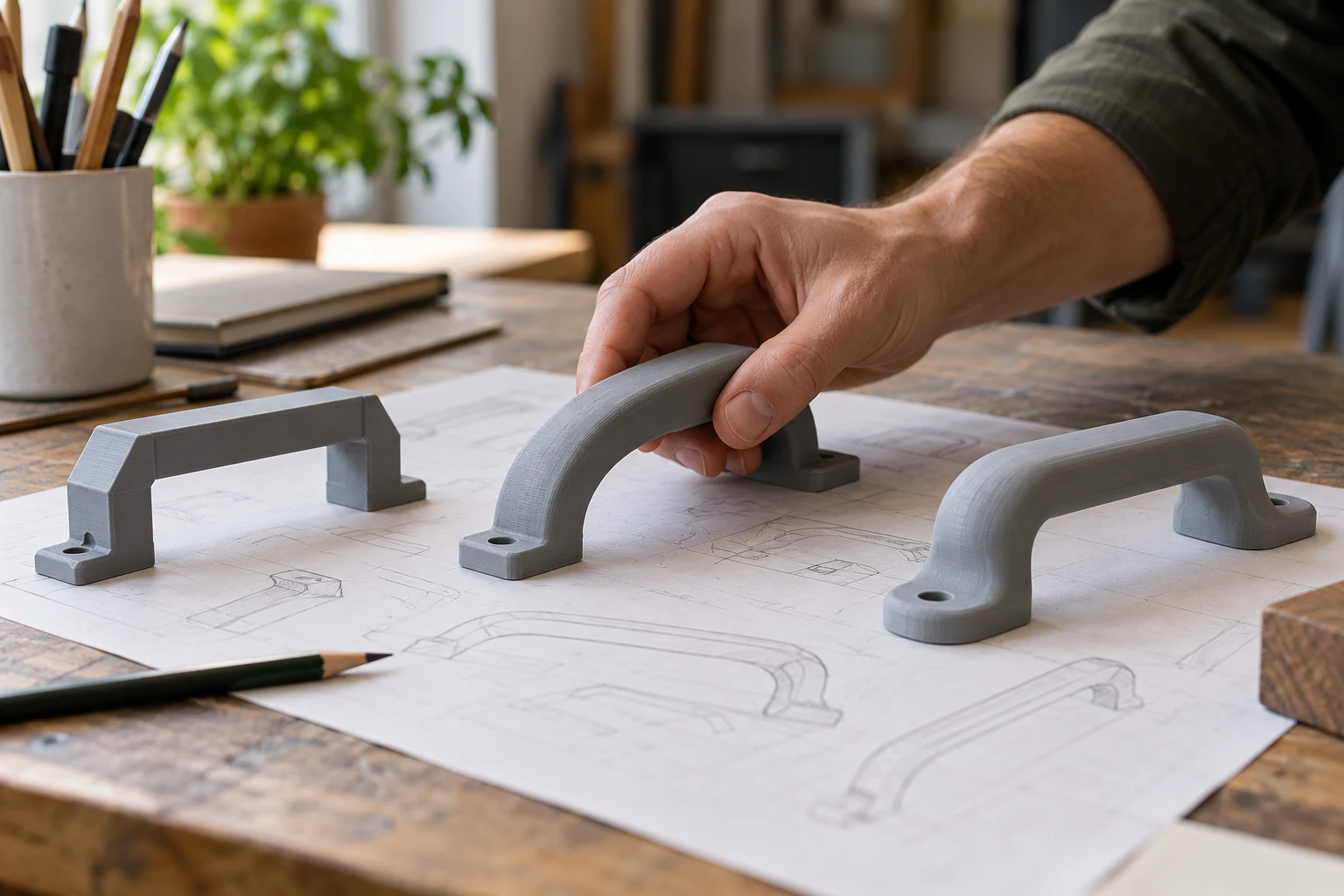
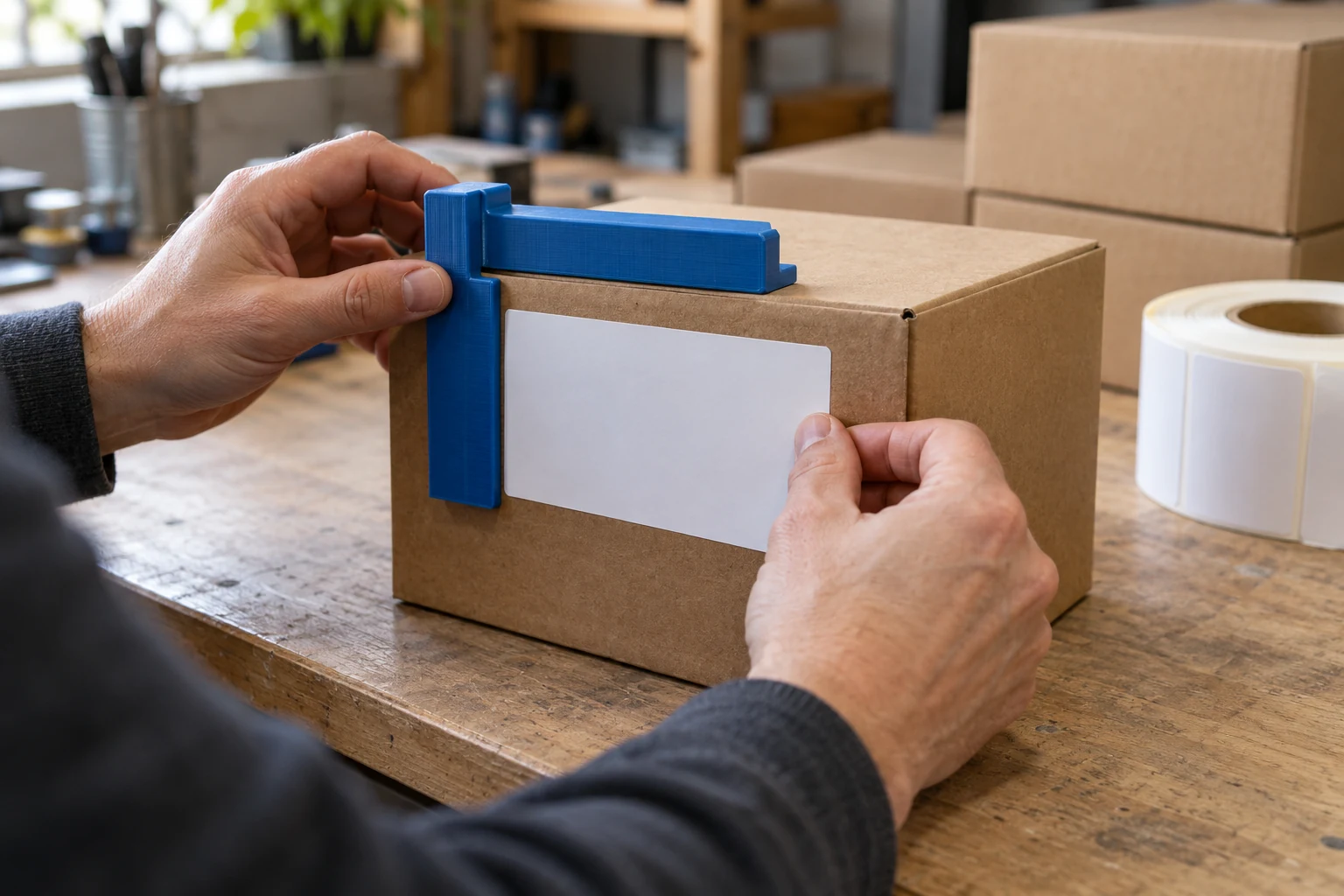
3D printing does not require a separate mold for each model. Injection molding has tooling costs that are spread over the production run. There is no universal break-even quantity; compare complete proposals for the same task.
Compare the entire order
Ask for quotes for the same quantity and approved model version. Include development, production preparation, samples, manufacture, additional operations and delivery. A low unit figure does not show the full cost when tooling or a minimum batch is paid separately.
If you are testing demand for a new holder, the relevant comparison may be the first twenty usable parts. A price for several thousand answers a different question. If the design is still changing, ask how much a modification would cost before the next batch.
When printing is a practical way to begin
Consider printing for the first examples, alternative shapes or an item made to unusual dimensions. A new geometry is supplied as a file, allowing one version to be checked before an approved design is repeated. This flexibility is useful during development, while printability and material properties still require assessment.
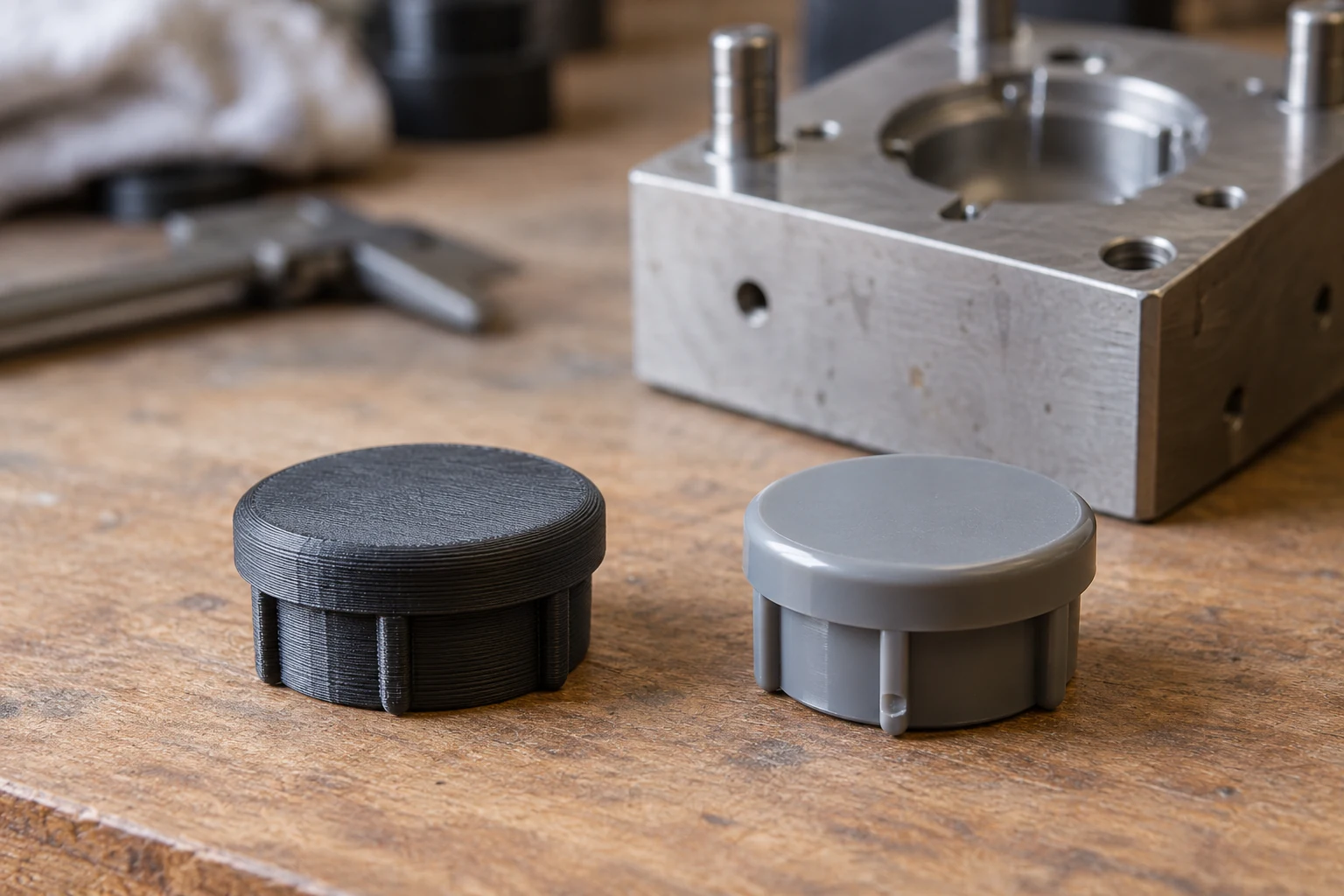
The process also leaves its own surface characteristics, and the result depends on material and layer direction. If these matter to the product, review the FDM surface-finish guide and agree a sample rather than assuming it will resemble molded plastic.
When a molding quote is worth requesting
For a stable design and repeat production, obtain a separate molding proposal. Include the mold, samples and batch terms in its economics. Compare material, texture and dimensional requirements as well. Giving two items the same product name does not mean they have the same manufacturing process or properties.
Molding needs its own design-for-manufacture preparation. Changing completed tooling can add expense and time, which makes design validation important before choosing the method. DECORDS 3D offers FDM printing. Molding is discussed here as a comparison, rather than a workshop service.
Calculate a break-even point for your own project
Obtain confirmed offers from the two suppliers at several quantities. Add the one-off costs and the cost of all parts for each option. Divide by the number of usable items to find the average. Treat delivery and additional operations consistently so the comparison remains meaningful.
Include the possibility of design changes. An untested batch may need replacing regardless of the technology. The numbers 100 or 1000 do not establish value on their own. Examples from a different manufacturer and machine cannot be transferred directly to your geometry as a commercial offer.
Start a small batch at DECORDS
Upload an STL or OBJ to the calculator and compare the quantities you actually need. Preparation is added once, while discounts for identical parts begin at 10, 50 and 100 copies. The small-batch pricing guide explains the calculation and current example.
If the project is still evolving, start with a prototype. If there is no model, use the project form. Include the first-order plan and likely repeats, so the production discussion reflects demand and the stage of development.
Common questions
Is printing always cheaper below a thousand parts?
No universal threshold applies. Geometry, material, machines, tooling and product requirements affect the result. Compare complete offers for the same task.
Can a printed prototype be followed by molding?
Yes, that route can be considered. The design still needs review and preparation for the chosen production process. A printed sample tests the idea rather than automatically approving it for molding.
Technical references
Manufacturer guides explain printing and design principles. We agree the requirements for your particular part before production.
Find out what your model will cost.
Upload an STL or OBJ. If you do not have a file, send photos, a sketch and measurements. Modeling and printing are quoted separately.
Back to DECORDS 3D