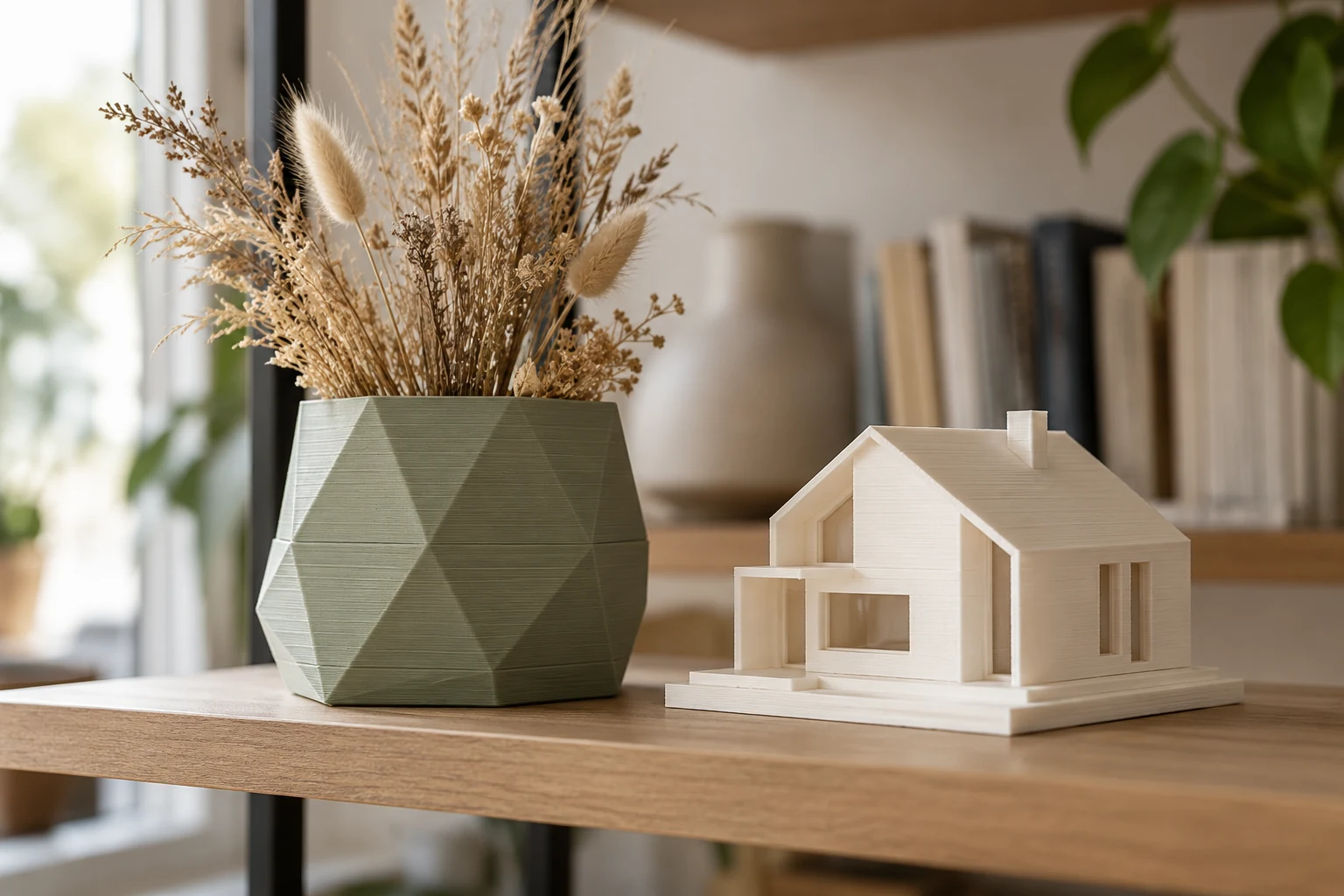
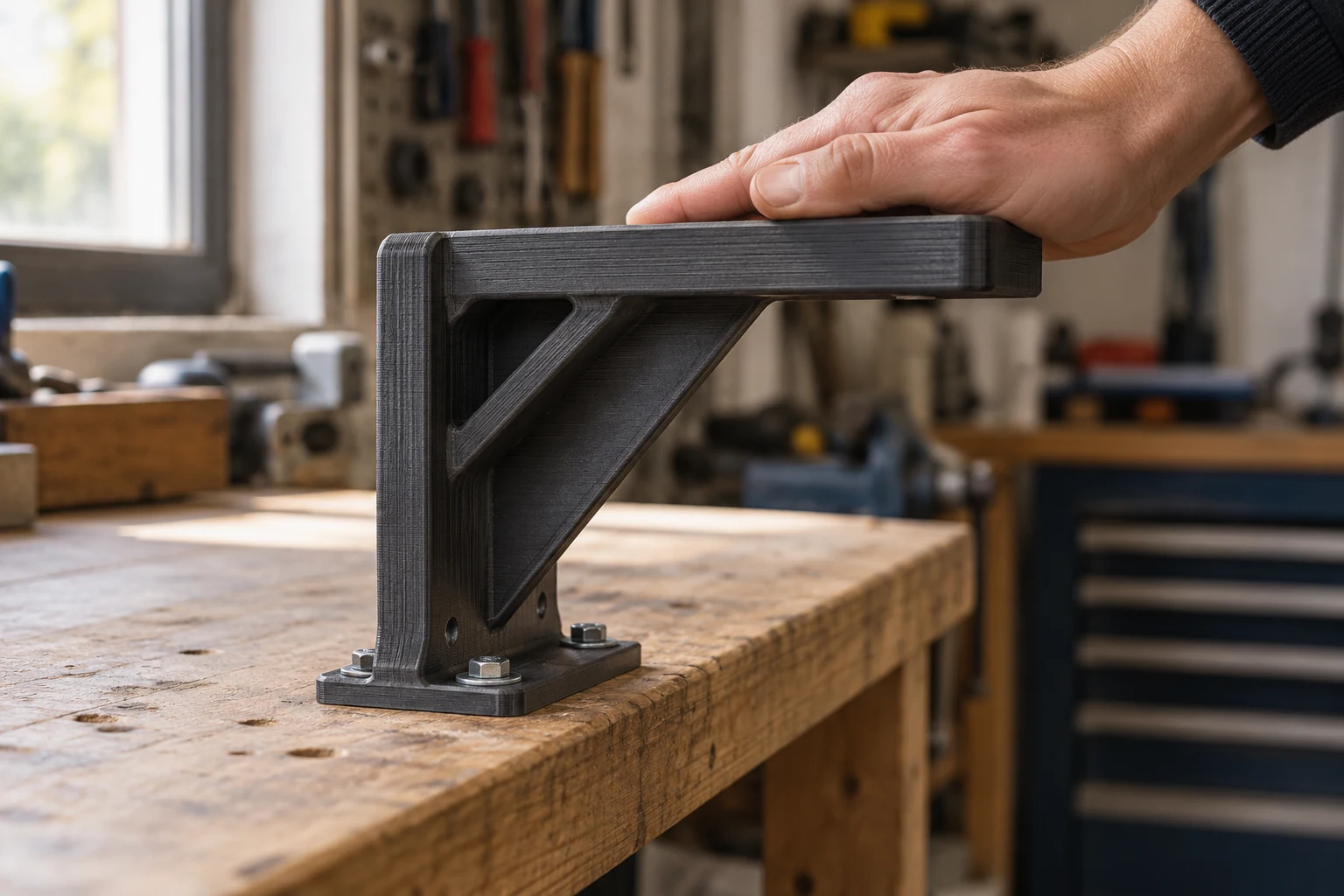
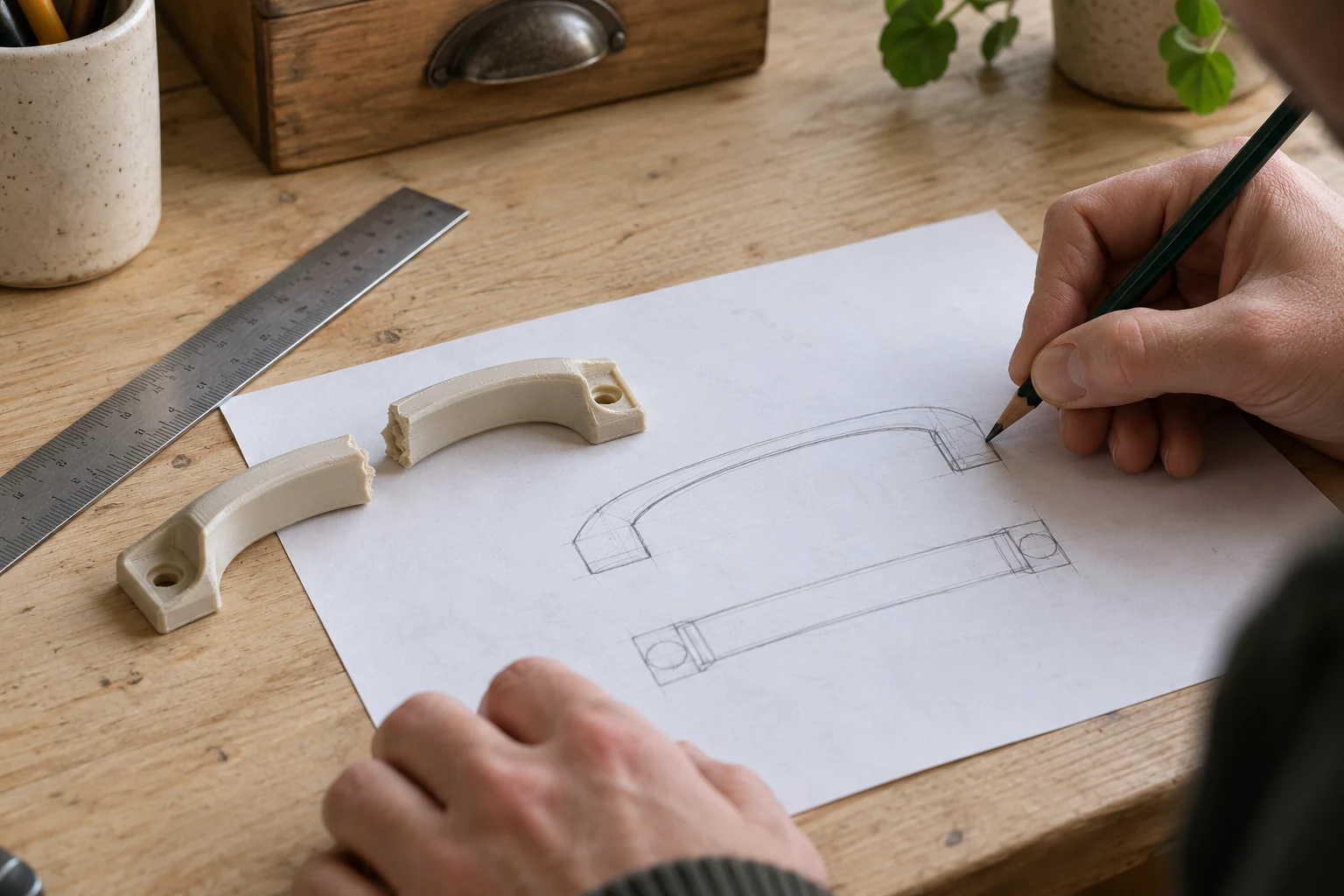
FDM prints can show layer lines and the point where the outer contour starts. These come from the manufacturing method. Agree the appearance using real examples, the required texture and important visible faces; a screen model is not a photograph of the printed surface.
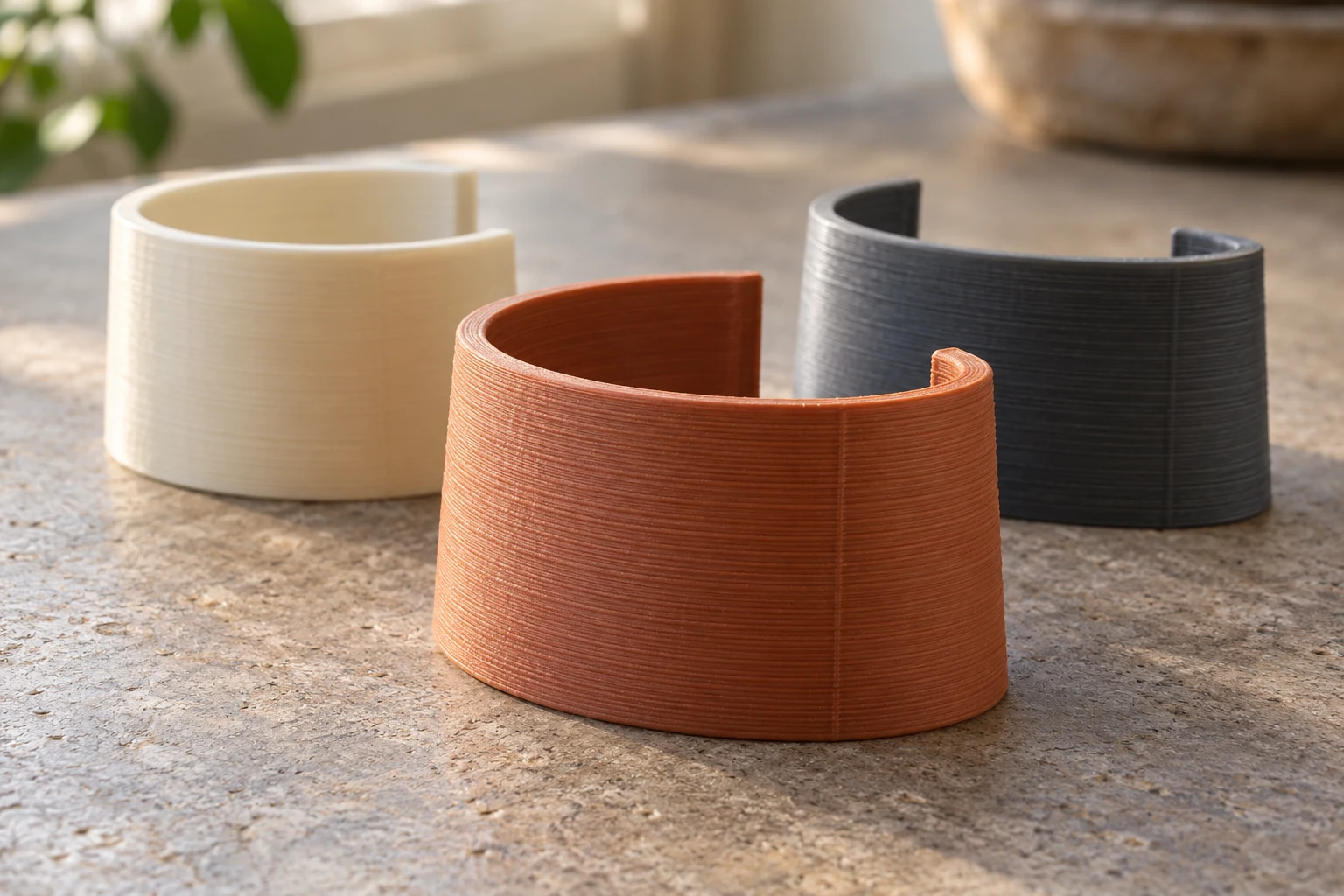
Why a printed surface differs from molded plastic
An FDM printer builds a shape through successive layers. That step can remain visible on a curve or slope. The print will not necessarily look like a smooth industrially molded object, even when the digital model appears perfectly smooth.
Judge the finish from a normal viewing distance and in the context of its purpose. A hidden internal holder and a decorative object in a prominent position may need different finishes. View DECORDS work examples and identify the surfaces that matter most to you.
Identify the faces that will be visible
Different areas of an object can have different textures. Orientation, build direction and surfaces that need supports all influence appearance. A thinner layer can improve vertical detail, but its selection is connected to the geometry and manufacturing time.
Mark the front face, inside surfaces and areas hidden after installation on a photograph or sketch. You do not need to specify every printing setting. The important information is what you will see in daily use and the result you need in that situation.
Distinguish a normal texture from a printing problem
Regular surface lines and a contour-start seam should not automatically be treated as a failure. Clear layer separation, displaced geometry or missing material need separate attention. Appearance and the ability to perform the job have related but distinct criteria.
If a delivered item raises a question, keep the order reference and take an overall photograph plus a close view of the area. Explain whether installation or use is affected. That lets the workshop compare it with the approved model and parameters, rather than interpreting an unclear fragment.
Use screen colors as a guide
The site offers 16 PLA colors. PETG, ASA and TPU are available in black, white and gray. Display settings and lighting affect the color you see. Light also behaves differently on a smooth surface and a ribbed one, so a digital swatch is an indication rather than an exact sample.
Tell us beforehand if the object needs to coordinate with furniture, equipment or a previous part. A color name does not establish an exact match to an external catalog or shade code. Include the previous order number when requesting a repeat so its parameters can be discussed.
Agree appearance before payment
A short statement can explain the requirement: “This is a visible cover; the front face matters and layer lines are acceptable,” or “I will finish the part myself.” Painting, sanding and other manual finishing are separate operations unless expressly included in the agreement.
For a suitable ready file, start with the calculator. If the requirements need individual discussion, send photographs and a description. For a new design with demanding appearance requirements, agree a sample first before returning to the full quantity.
Common questions
Can a printed surface be completely free of layer marks?
Ordinary FDM printing does not promise a surface without traces of the process. Describe the finish you need so feasibility and any additional work can be discussed.
Does the 3D preview show the final texture?
It helps assess geometry, size and selected color, but it is not a photograph of the finished surface. Refer to actual printed examples and the agreed finish.
Technical references
Manufacturer guides explain printing and design principles. We agree the requirements for your particular part before production.
Find out what your model will cost.
Upload an STL or OBJ. If you do not have a file, send photos, a sketch and measurements. Modeling and printing are quoted separately.
Back to DECORDS 3D