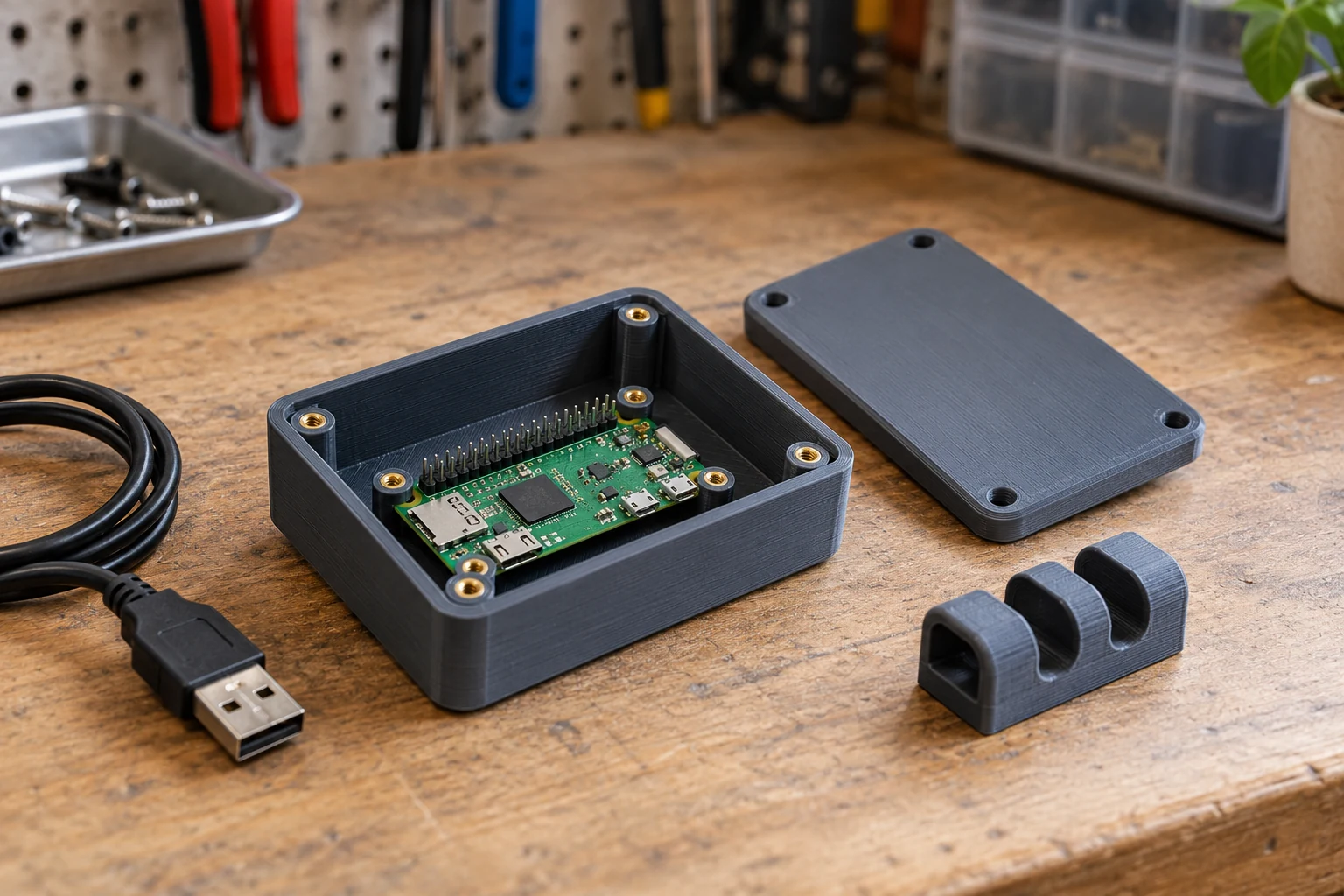
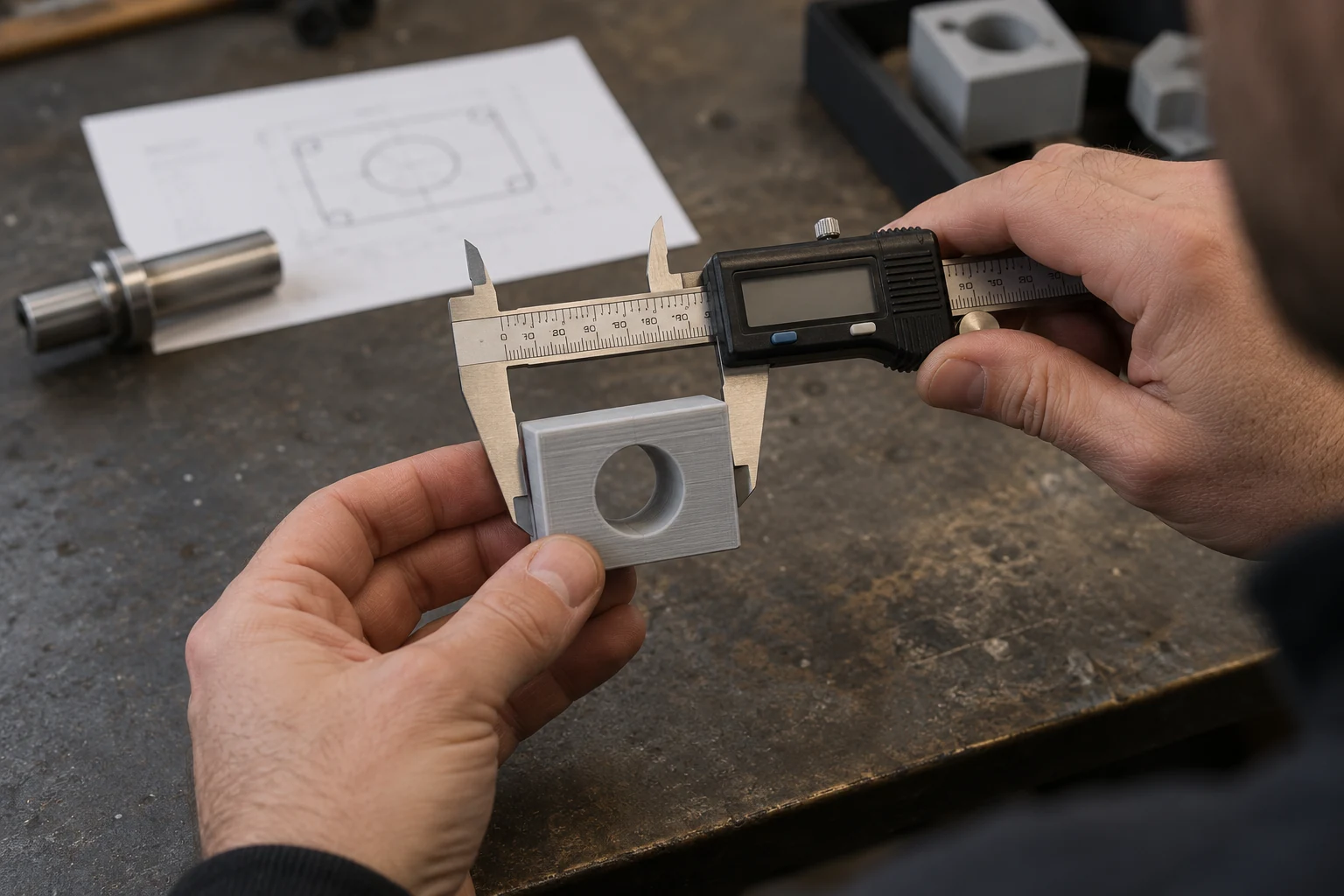
3D printing can be suitable for functional parts, but strength must be assessed for the particular design. Material, shape, outer walls, layer direction and working conditions all matter. A material name alone does not establish a load rating.
Explain what “strong” means for your part
A cover protects its contents, a holder supports an object and a snap fit bends during assembly. These are different jobs. A stiff part may handle impacts poorly, while a flexible part may be unsuitable for a connection that must stay rigid. The useful starting point is the action the part must perform.
Instead of asking for maximum strength, describe the load: what pushes or pulls, in which direction and how often. Include temperature, outdoor exposure, water and the possibility of drops. That information helps establish the requirements before the part is made.
Print orientation changes how a part behaves
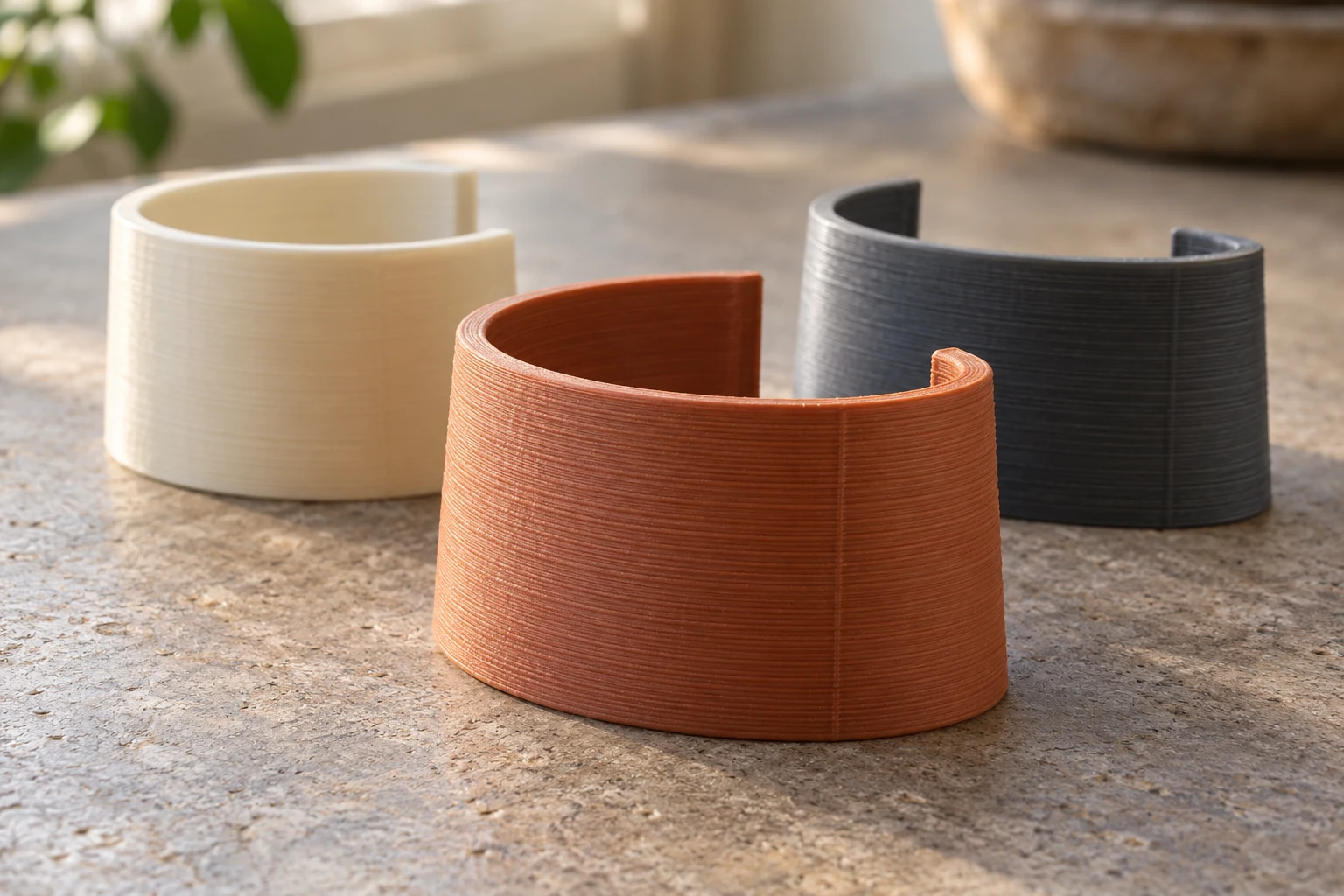
FDM printing builds an object layer by layer. Its response to load depends partly on the direction of those layers relative to the force. The same geometry printed in another orientation can behave differently in bending or at the layer interfaces. Orientation is therefore part of preparation.
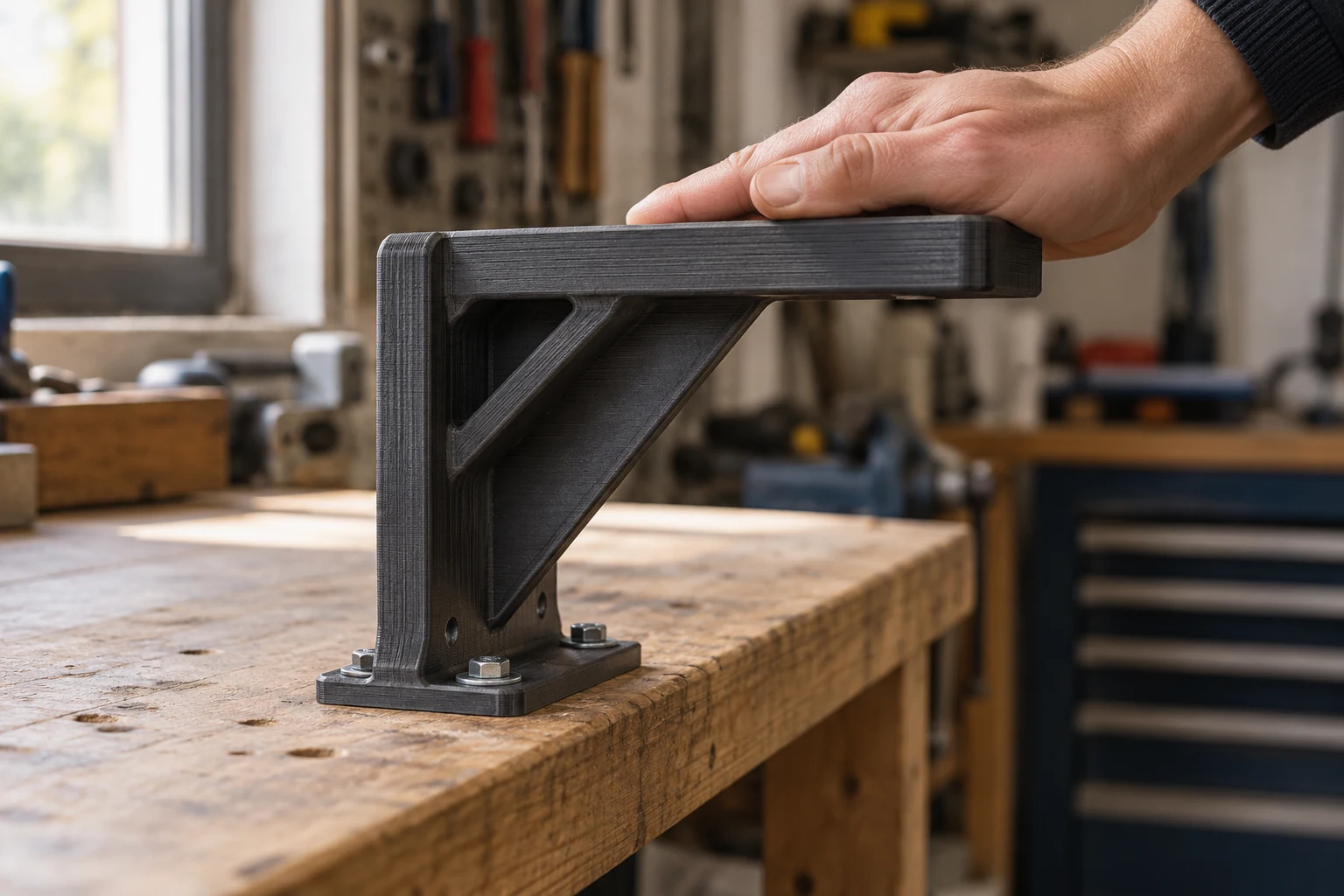
For a bracket, show both its mounting points and the direction of the force. An attractive photograph may not explain either. A sketch with a load arrow, or a photograph of the installed assembly, can make a modeling request much clearer.
100% infill cannot repair a weak design
Outer walls and internal infill contribute in different ways according to the geometry. Material needs to be in the places that carry the load. More infill does not remove a thin weak connection, an abrupt transition or an unsuitable printing direction.
For a new part, discuss wall thickness, transitions, fixing points and orientation. You do not need to guess every printer setting yourself. Explain the purpose and constraints, then agree the approach. Any necessary changes to the model are assessed as separate work.
Choose a material for its conditions
PLA can be a starting point for an indoor mock-up, PETG for an everyday functional part, ASA for outdoor use and TPU for a flexible pad. These are starting points rather than a simple ranking from weak to strong. Each material has its own limitations.
Read the guides to PLA, PETG, ASA and TPU. Make the choice around the working conditions, rather than only the difference between minimum order prices.
Test a sample before repeating the design
For a new assembly, start with one sample. Check installation, access to fasteners, intended movement and behavior in the expected conditions. Changes are easier to address before dozens of copies are produced. Tell us which checks you intend to perform yourself.
A component connected to personal safety or important equipment needs an appropriate engineering assessment and testing. An ordinary file-based print order does not establish a safe load in kilograms. Describe the intended use when requesting printing, before production begins.
Common questions
Can a bracket be given a weight rating from the material alone?
No. That requires the actual geometry, mounting, material, type of load and appropriate testing. A material name or infill percentage does not establish a rating.
Do visible layers mean the part will break?
No. Layer construction needs to be considered in the design and orientation. Visible surface lines alone do not prove inadequate strength; actual layer separation is a different issue.
Technical references
Manufacturer guides explain printing and design principles. We agree the requirements for your particular part before production.
Find out what your model will cost.
Upload an STL or OBJ. If you do not have a file, send photos, a sketch and measurements. Modeling and printing are quoted separately.
Back to DECORDS 3D