TPU is considered for flexible parts, covers and protective elements. How soft a print feels depends on the particular material, geometry, walls and infill. The DECORDS minimum for a TPU order is €12.30.
When the part needs to move rather than stay rigid
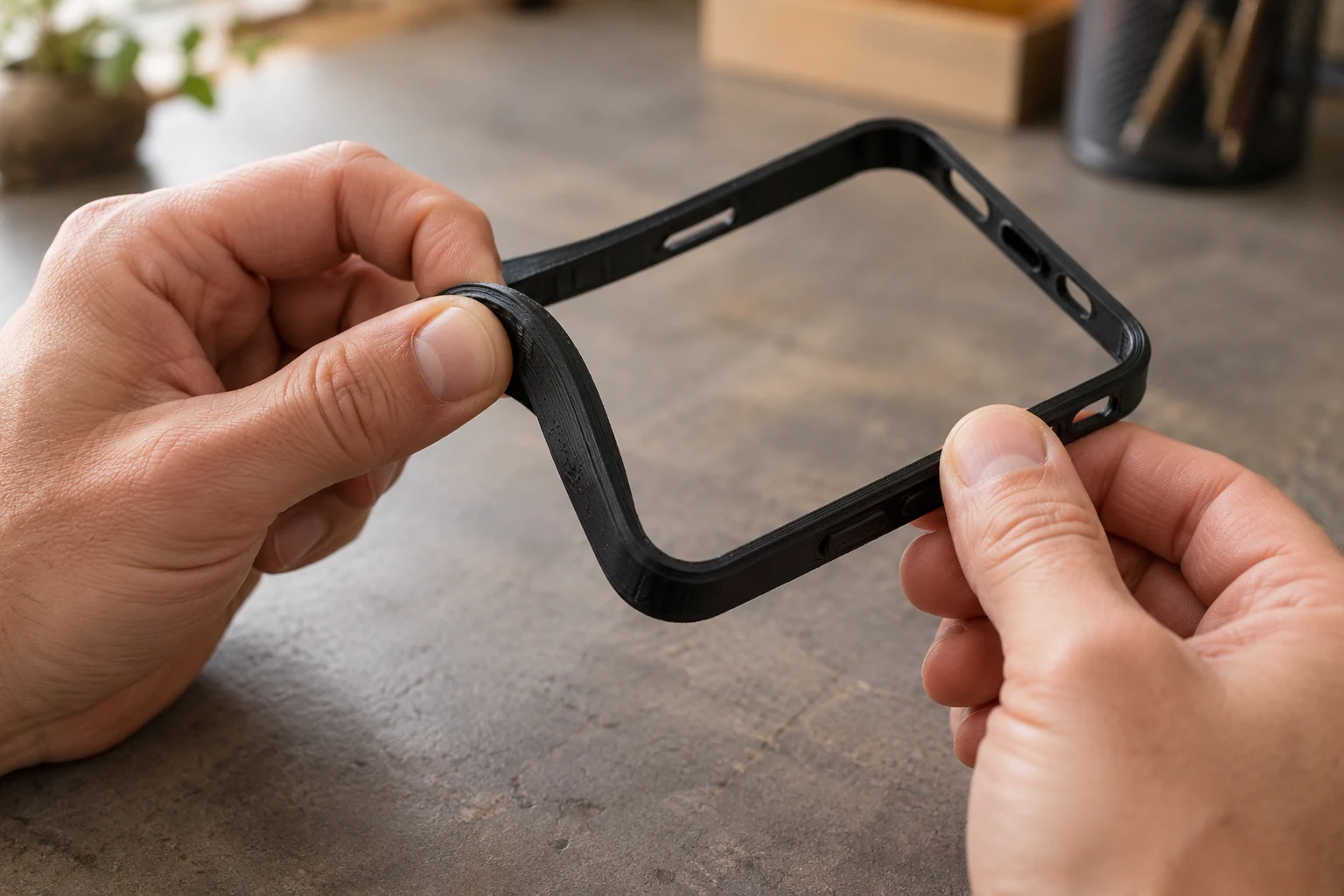
Some parts need to bend during installation, soften contact or wrap around another object. TPU is worth discussing for those tasks. Examples include a protective pad, a cover for an unusual housing or a soft contact element between two surfaces.
“Flexible” does not fully describe the required behavior. You may need a small springy movement, or a part that can be compressed easily between your fingers. Explain the action and show the object it interacts with. That provides a better brief than asking for something rubbery.
Why two TPU prints can feel different
Different TPU grades have their own hardness characteristics. Geometry matters too: a thin wall and a solid block of the same material do not flex in the same way. The result comes from the combination of material, design and manufacturing parameters.
The website does not promise a particular Shore hardness for every TPU order. If you have a hardness requirement, include it in the project form. We need to confirm a suitable material and achievable behavior, rather than relying on the TPU label alone.
A cover needs more than its outside dimensions
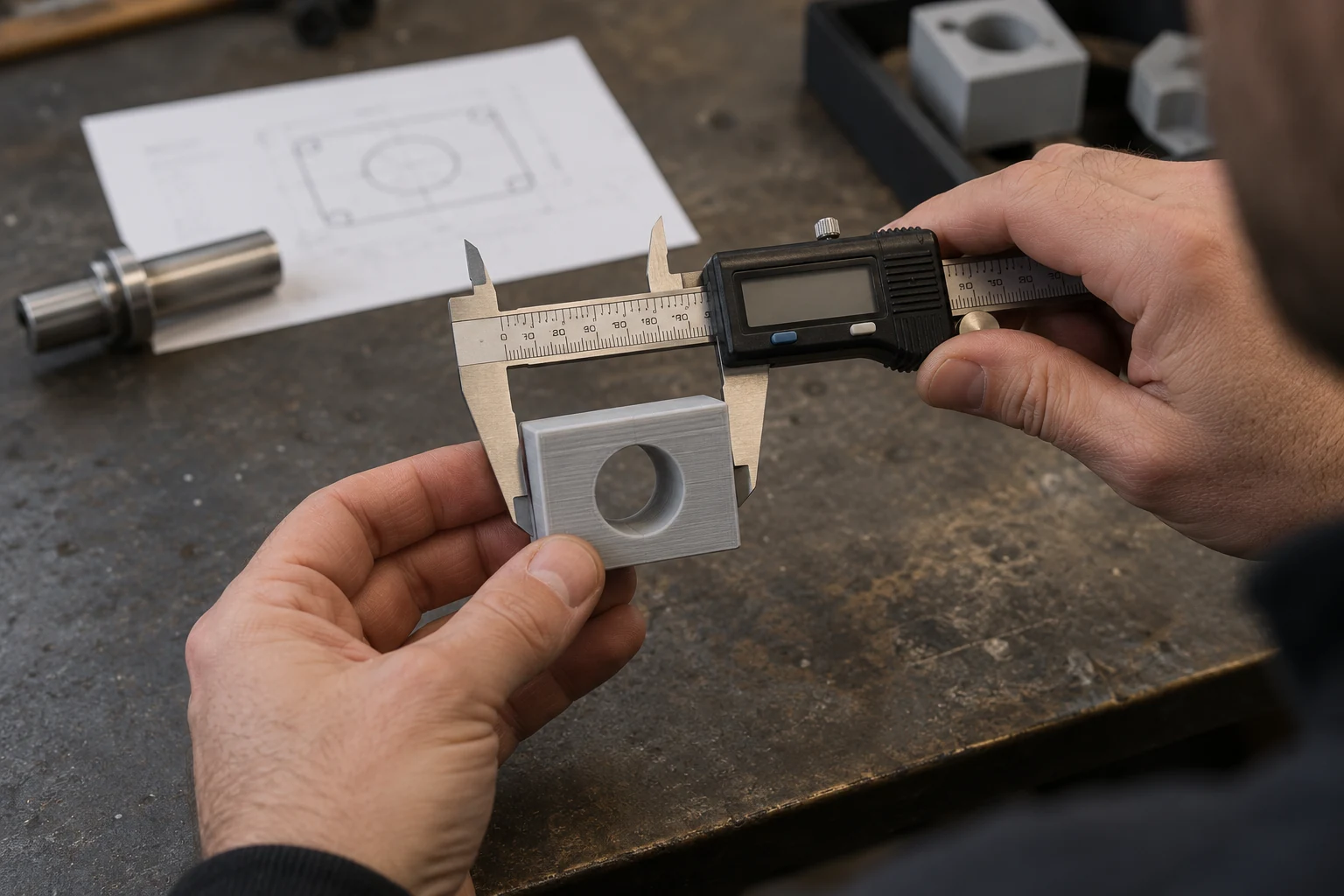
For a close-fitting part, overall width, length and height are not enough. Measure contact surfaces, projections and features that must remain accessible. Send photographs from several sides and indicate where the cover holds on and how it should be removed.
For a cushioning pad, describe the type of contact or impact. A seal is a separate design and testing requirement. An ordinary flexible print does not automatically become a seal with specified performance. Important functional properties need to be confirmed for the application.
Expect the texture of a printed surface
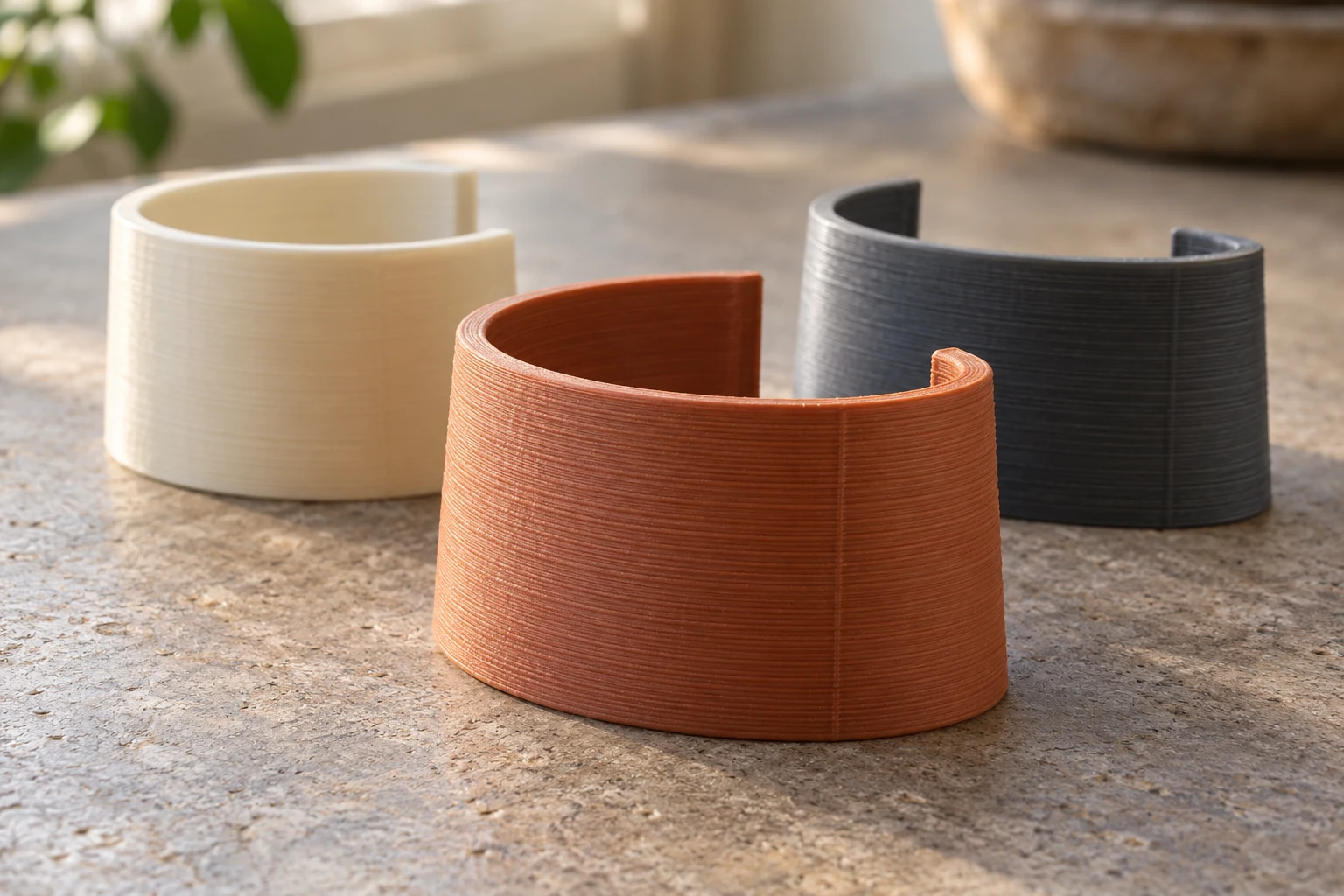
TPU is printed in layers, so its surface retains an FDM texture. Slopes and complex areas may look different from a smooth molded item. If one face is especially visible, identify it in the request and discuss the finish before manufacture.
The available TPU colors on the site are black, white and gray. A screen cannot act as an exact color sample. The surface-finish guide explains layer lines and how normal manufacturing texture differs from a printing problem.
Order a sample that tests the actual function
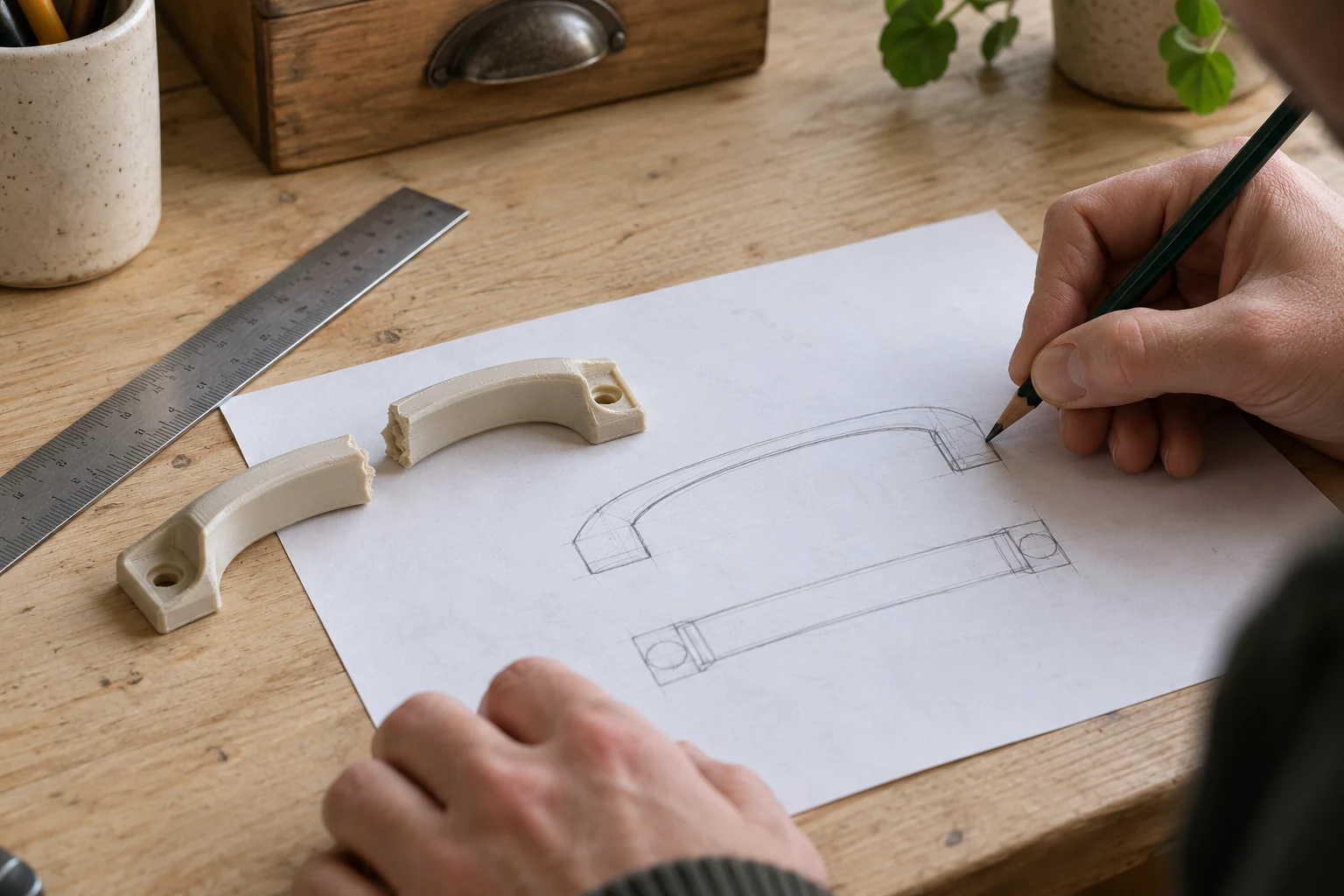
If you have an STL or OBJ, open the printing calculator, select TPU and check the dimensions. The minimum is €12.30, including preparation. Without a suitable file, send the required movement, measurements and photographs for a separate modeling proposal.
Try the first sample on the real connection. Check how it fits, how much it compresses and whether it obstructs another feature. Use those observations to refine the design before discussing quantity. The aim is to obtain the required function, rather than simply an object made from a chosen plastic.
Common questions
Will TPU feel as soft as silicone?
Not necessarily. The feel and behavior depend on the material grade and geometry. Describe the movement or send a useful reference so an appropriate approach can be discussed.
Can you make a cover without an existing 3D model?
Yes, the process can begin with a modeling request. Send photographs, measurements and a description of the fit. Modeling and subsequent printing are quoted separately.
Technical references
Manufacturer guides explain printing and design principles. We agree the requirements for your particular part before production.
Find out what your model will cost.
Upload an STL or OBJ. If you do not have a file, send photos, a sketch and measurements. Modeling and printing are quoted separately.
Back to DECORDS 3D